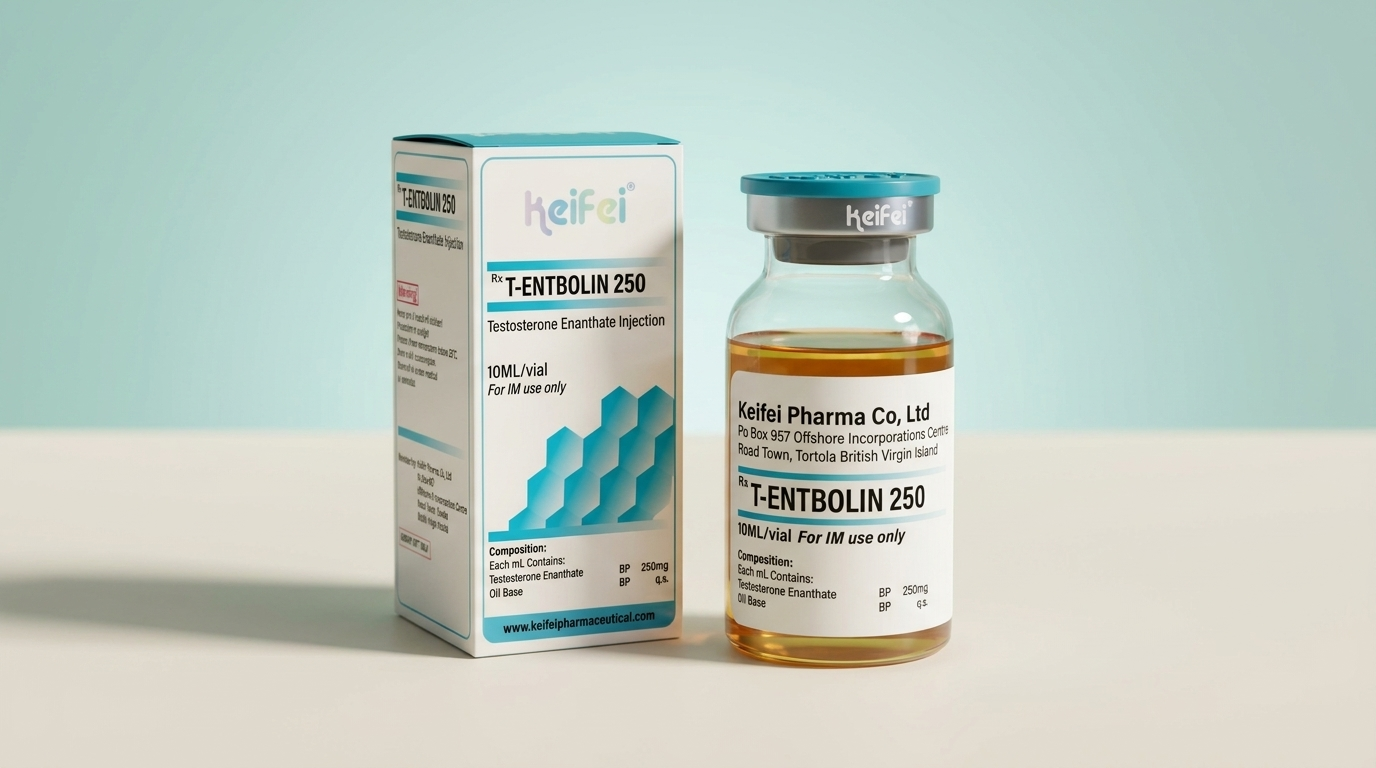
1. The lot number
Every genuine unit carries a KF-prefixed lot number, printed on the vial or blister and repeated on the carton. That number ties the unit to a single production batch and to its Certificate of Analysis. The most reliable test is consistency: the lot number on the vial, the box, and the COA should match exactly.
- Printed cleanly and identical across vial, box, and certificate.
- Hand-written, smudged, missing, or mismatched lot numbers are a red flag.
- If a seller cannot tell you the lot number on the unit you will receive, the product is not from a controlled facility.
2. The embossed KeiFei® cap
Injectables are sealed with a crimped aluminium cap embossed with the KeiFei® mark. Embossing is a physical, tamper-evident feature — pressed into the metal, not printed on top of it — which is far harder to fake than a label. A flat printed cap, an unbranded cap, or a cap that is already loose indicates the seal is not genuine or has been disturbed.
3. The branded box
Genuine product ships in a printed KEIFEI carton showing the correct logo, product name, strength, and a batch-printed expiry. Compare it against known-good packaging on the authenticity guide. Counterfeit cartons commonly show off colours, a blurred or slightly wrong logo, spelling errors in the small print, or a panel that is missing or duplicated.
4. The lot-matched Certificate of Analysis
Each batch has a Certificate of Analysis from an independent, accredited laboratory, matched to the lot number on your unit. It reports compound identity and concentration by HPLC and carries the lab's letterhead, stamp, analyst signature, and contact details so it can be verified directly. A generic "lab tested" badge with no batch-specific document is not a COA. We break the certificate down field by field in How to read a Certificate of Analysis.
The rule of four. If any one of these is missing or inconsistent, treat the product as unverified — regardless of how convincing the others look. Genuine KEIFEI passes all four, every time.