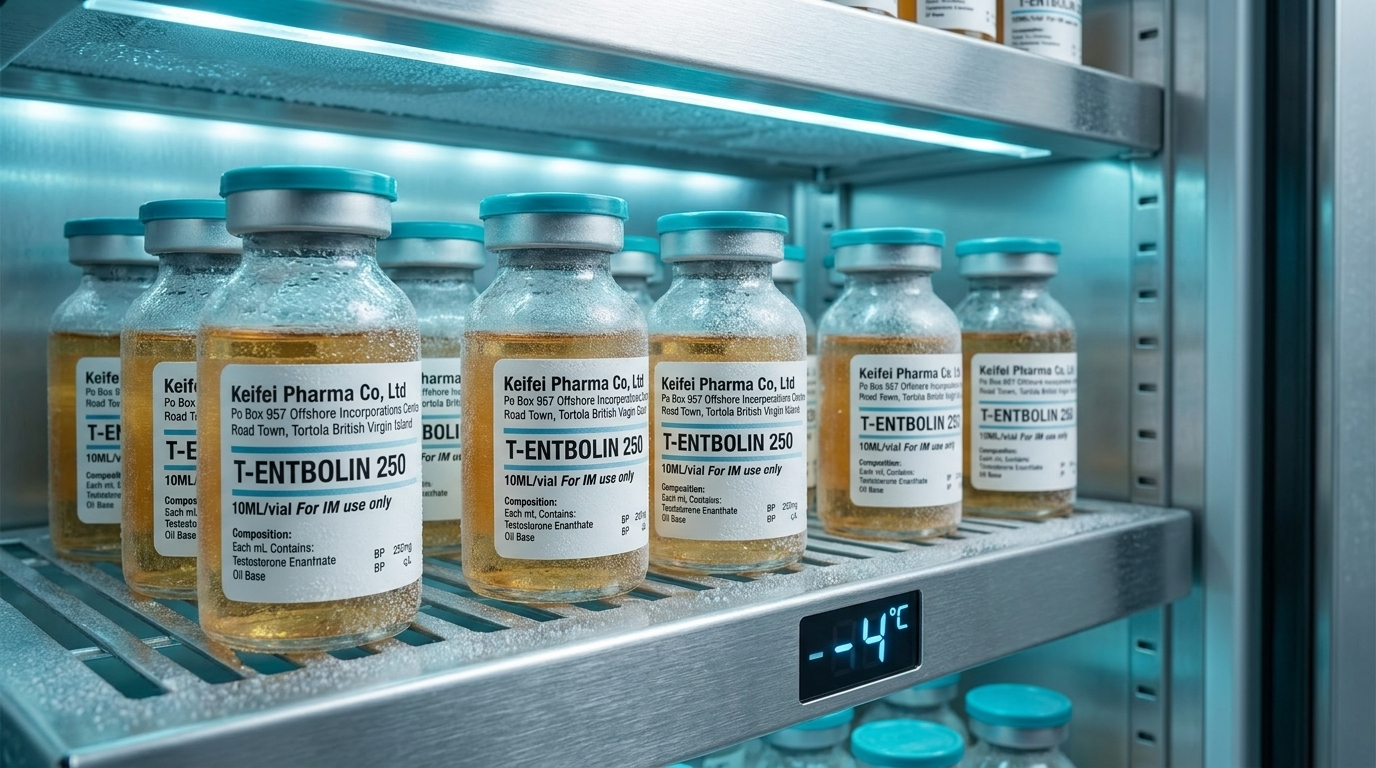
Two formats, two storage rules
KEIFEI compounds come in two forms with different needs. Injectables are oil-based solutions in sealed pharmaceutical vials; orals are film-coated tablets in blister packs. Both are generally kept below 25 °C, away from direct light, and out of reach of children — but the conditions and expiry printed on each individual label and box take precedence over any general rule.
Why light and heat matter
Heat and ultraviolet light can accelerate the breakdown of active compounds and excipients over time. Keeping product at controlled room temperature and out of direct sunlight protects the same assay value the Certificate of Analysis records — see how to read a COA. Storage and testing are two halves of the same promise.
The cold chain, for dispatch
Shipping is where product is most exposed, because it leaves a controlled store. KEIFEI injectables move under cold-chain handling — dispatched at controlled cold and accompanied by a temperature log that documents the journey. The cold chain protects sterility and stability during the window when the product is in transit rather than on a shelf.
Why the temperature log matters
A temperature log is the evidence the chain was not broken. Product that arrives with no cold-chain documentation has an unknown handling history — there is no way to tell whether it sat in heat for days. Documentation is what separates a controlled shipment from an unverifiable one.
Reading the label
- Every box and label states storage conditions and a batch-tied expiry.
- The expiry should be printed and legible — not stickered over or handwritten.
- Expired or undated product should not be used, even for research.
What stressed product looks like
Cloudiness, visible particulates, crystallisation, or a colour shift in an oil solution — or crumbling and discoloured tablets — can indicate the product has been stressed. When the appearance does not match the certificate's description, stop and verify before going further.
Storage is a chain. The facility controls manufacture, the cold chain controls transit, and correct storage on arrival keeps it intact. A break at any link can alter the product — which is why documentation accompanies it at every stage.